By Dr. Lynn M. Jamieson
Recent widely publicized sports issues have gained the attention of the highest echelons of the United States Government. The White House reports have included the call for stronger public policy about compensation, safety, and regulatory capacity of sport development in the nation. In July 2025, specific areas in college athletics were announced through an executive order. These included a call for:
Bans on “pay-for play” payments
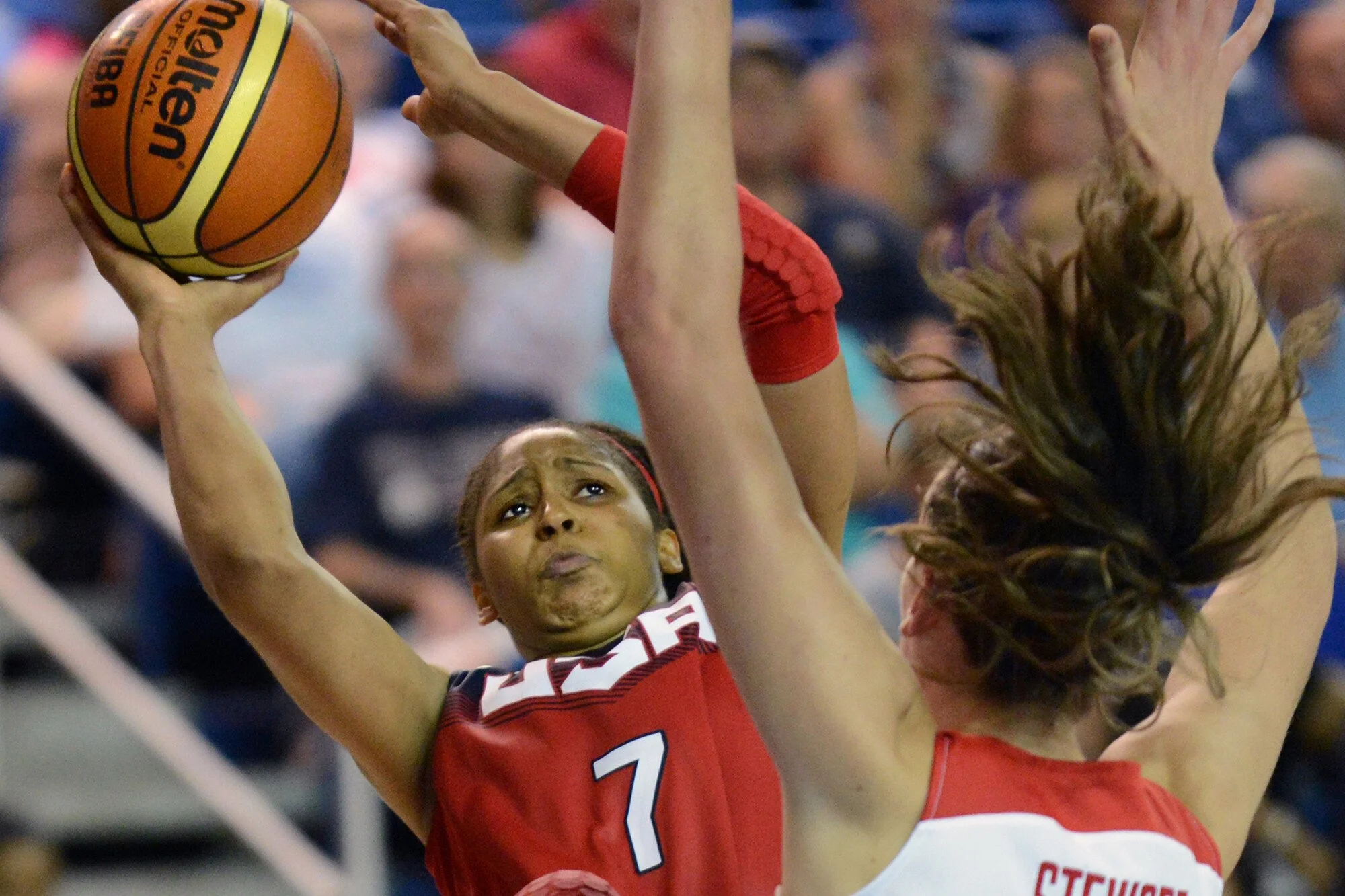
Allowance of fair-market NIL deals
Revenue sharing to protect women’s and non-revenue sports scholarships
Clarification of employment status of student-athletes (1).
This isessentially the first time that a call has come directly from the White House for specific areas involving sports; however, it is not the first time that some policies have been generated at the national level.
Since 1984, I have studied international sport policy by conducting in person interviews with 13 countries through structured interview process involving over 20 collaborators who either served as interviewers or facilitated the interviews of government officials, sport programmers, and other constituents involved in the delivery of sport programs at the national, regional and local levels. As a result, while most countries developed sport policy at the national level through ministries of sport and tourism, the United States had placed its sport policy development with the United States Olympic Committee and a multitude of national sport organizations represented specific sport interests. In 1909, Pierre de Coubertin, father of the modern Olympic movement, envisioned a modern sport effort that included not only high-level sport competition, but also sport for all citizens. In 1958, Dwight Eisenhower, then President of the United States founded the President’s Council on Fitness which was run by Congress and included the development of fitness testing in schools. This group grew to include sport and nutritional guidelines for schools as well.
Examples from my studies of governmental policy affecting sports and recreation shows that countries were influenced by three distinct models: European, Latin, and Asian. One caveat is that there are many countries that were not studied and that future studies may yield additional categories, but for the purposes of general explanation, these models may be defined by the following:
European – sports ministry at the top governmental level with a club system at the local level. Funding for facilities, training, and other support is provided in part by this ministry. Additional support provided by sport-specific federations.
Latin – departments of sport and recreation at the top governmental level with a diverse local system of school, club, and private organizations that along with sport-specific federations provide support for facilities, training, and events.
Asian – sports ministry at the top governmental level, local systems like the Latin model along with support of government and sport federation levels.
It was found, however, that the United States has avoided developing centralized policies that govern sport, and because policy development has occurred through multiple organizations, the ability to develop sound sport programs has been somewhat fragmented and left to specific sport organizations and the states. This approach appears to be shifting somewhat as organizations as the National Collegiate Athletic Association have responded to the existence of issues with sport violence, player eligibility, and athlete pay scenarios.
The lightening rod of transgender athlete eligibility among other issues has caused the development of policy directions in the United States government. Up until now, according to Project Play (Aspen Institute, 2025), the federal government has avoided direct policy development except for the development of President’s Council on Sport, Fitness and Nutrition (1958), Title IX (1972), the Amateur Sports Act (1978), and the recent development of the National Youth Sports Strategy (2019). In terms of funding, the President’s Council on Sport, Fitness, and Nutrition has funded various campaigns throughout its lifecycle, to include an Awards Program in the Schools, fitness campaigns involving all ages, and specific demonstration projects. Other funding, however, has come from sporting organizations, and through the Land and Water Conservation Act of 1964. According to Project Play of the Aspen Institute, the United States Olympic and Paralympic Committee has funded National Governing Boards (NGBs) over $100 million annually to train high-performance athletes. This collection of national, state and local organizations has been a complicated patchwork of efforts to provide a solid foundation for sport development, and a strong policy still does not exist to support early development of fitness efforts, sport-specific advisory programs, and alleviation of sport injury, violence, and fairness. According to Orr and Jamieson (2021), the United States sport policy network is described as a “2021loosely coupled, semiautonomous, autpoietic system”. This means that the many organizations that provide sport little connection with other sectors, are considered to govern themselves partially, and that the organizations remain stable over time.
This fragmentation is evident in comparing the United States levels of policy development with limited national government policy direction and a plethora of non-profit and profit organizations at the national, state, regional, and local levels. These many organizations have limited coordination with each other except when there are competitions that are governed by intercollegiate, interscholastic, and Olympic levels. For example, national, sport-specific organizations govern that sport with rules and regulations involving participant eligibility, codes of conduct, sport rules, and other element of governance. These organizations are sources for specific sports at the local and regional levels. Then, at the local level, a multitude of private, private, and commercial operations provide locations for participants to gain expertise in a variety of sports. This presents the challenge of providing equity for all those who wish to participate in sport, where, cost prohibitive programs and facility deficits make it difficult for those without resources to be able to progress in skill and accomplishments. Table 1 shows the variety of sport organizations at different levels in the United States.
What is needed to strengthen sport safety, involvement, and excellence? In. general, there needs to be a national guiding principal for sport development, sport skill development, and sport safety. With new rules and regulations allowing for various forms of incentive pay for collegiate athletes of athletes at the collegiate level, and the blurring of lines between what comprises an amateur or professional athlete, guiding principles need to be rewritten and adhered to. What national organization is most likely to succeed in influencing sport development at the local level – national policy, state policy, local policy?? Do federations of sport such as the International Olympic Committee, National College Athletic Administration, state high school activity associations, or other forms of governance need to address these changes?

Do we need a Ministry of Sport at the national government level, such as those in other countries? Some form of centralized guidance that is provided to allow sporting organizations at the national, state, and local levels is needed to serve to create a certain amount of consistency in the following areas:
Health Factors
Fitness and exercise patterns
Longevity issues
Stress factors
Facility needs
Program needs
Specific needs of target populations
Remote, rural access
Sports development needs
National and international visibility goals
Sport system regulatory issues (Orr and Jamieson, 2021)
Further, whether there is a national and/or decentralized policy encouraged for states, the following areas should be explored, and policies need to be developed (Orr and Jamieson, 2021, 179):
Standards and processes for sport program offerings at all levels.
A uniform code of conduct that ties behaviors to key consequences.
A policy framework that governs all operations relating to the physical, social, and emotional development of participants at appropriate age levels.
The development of sport coordinating councils at sporty participant levels to ensure program quality.
A framework of laws needs to be developed and be consistent with violence prevention.
Parental education processes need to occur at all levels of sport participation for all ages.
All organizations that provide the infrastructure of sport should be included into all planning mechanisms for sport programming.
A strong focus on a national approach to developing policies that sustain sport development and enjoyment at all levels of skill could be welcomed if fiscal support, training, and incentives for local support are included. Current national efforts have lacked a comprehensive approach so evident in other countries. While the United States succeeds in high level performance contest, there is still a very large portion of the population that cannot succeed without greater support, hence major inequities exist at the local and regional levels. It seems appropriate to consider improved coordination among the many sport organizations that provide sport-specific support with the goal of developing a more comprehensive approach to sport attainment in the nation.
References
Saving college sports (July 24, 2025). Retrieved 11/23/2025 at https://www.whitehoue.gov.
Aspen Institute: Project Play. (2025) Examining the world’s leading sport systems. (Retrieved 11/04/2025 at https://www.content/uploads.2025/07/world.com
Orr. T. J. and Jamieson, L. M. (2021). Sport and violence: a critical examination of sport. Champaign, IL: Sagamore Venture, 225 pp.